
SEO
How to Get Found on Google and AI Search in 2026
Search has split in two. Here is how to make sure your business shows up whether a customer is typing into Google or asking ChatGPT, Claude, or Gemini.
States Technology Labs
•Saturday, October 10, 2026 •8 min read
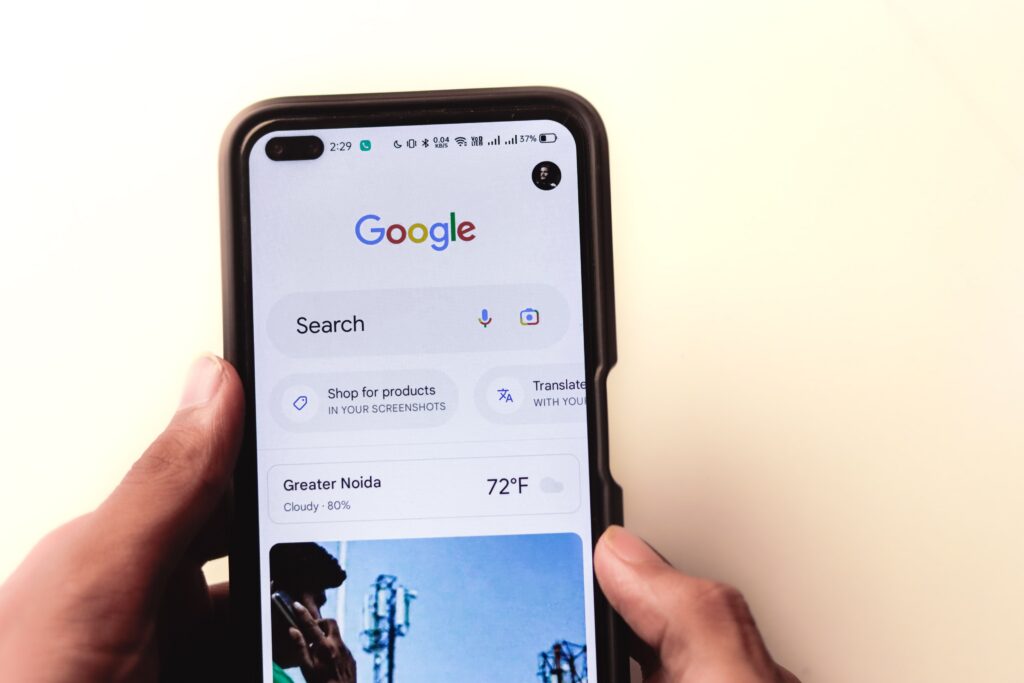
There are now two ways a potential customer can search for your business — and most small businesses are only optimising for one of them.
The first is the search engine you already know: Google. Type a query, get a list of links, click through. The second is newer and growing fast: AI assistants like ChatGPT, Claude, Perplexity, and Google’s own AI Overviews. Instead of a list of links, these tools generate a direct answer — and they either mention your business or they do not.
Getting found in both places requires overlapping but distinct strategies. This guide covers both.
Why AI Search Is Now a Real Traffic Source
In 2024, ChatGPT crossed 100 million daily active users. Google’s AI Overviews now appear on roughly half of all search results pages. Perplexity is growing at a rate that has made Google take notice.
When someone asks an AI assistant “who is the best local SEO agency in Missouri?” or “what digital marketing company should I use for my small business?”, the AI generates an answer from the sources it has indexed and trusts. If your business is not in those sources, you simply do not exist in that answer.
This is not a future concern. It is happening right now.
Part 1: Getting Found on Google
Traditional SEO is still the foundation. AI search engines largely pull from the same authoritative sources that Google ranks highly, so strong Google visibility feeds AI visibility too.
Claim and Optimise Your Google Business Profile
For any local business, your Google Business Profile (GBP) is the single highest-leverage SEO asset you have. It is what puts you in the Map Pack — the three local results that appear above the organic links and capture the majority of local clicks.
To optimise yours:
- Complete every field: business name, address, phone, website, hours, and category
- Add at least 10 photos (businesses with photos get 42% more direction requests)
- Collect reviews consistently — aim for a steady stream, not a one-time burst
- Post updates weekly to signal that your listing is active
- Answer every question in the Q&A section yourself before customers do
Target the Right Keywords
Keyword research in 2026 is less about volume and more about intent. A page targeting “AI web design agency Missouri” with 50 monthly searches will convert far better than one chasing “web design” with 50,000.
Use tools like Google Search Console (free) to find the exact phrases people are already using to find you. Then build pages and content around those phrases — not just once in a title tag, but woven naturally throughout headings, body copy, and image alt text.
Build Topical Authority
Google’s Helpful Content system rewards sites that demonstrate genuine expertise on a topic. A single page about local SEO is less powerful than a cluster of related content: a pillar page on local SEO, supported by posts on Google Business Profile optimisation, review strategy, citation building, and Map Pack ranking factors.
This is exactly what a blog is for. Each post you publish adds to your topical authority and gives Google more signals that you are a credible source on your subject.
Earn Quality Backlinks
A backlink from a reputable local news site, industry directory, or partner business tells Google that others vouch for you. You do not need hundreds of them — a handful of genuinely relevant, high-quality links outperforms thousands of low-quality ones.
Practical ways to earn them:
- Get listed in local business directories (Chamber of Commerce, BBB, industry associations)
- Write guest posts for local publications or industry blogs
- Issue press releases for genuine news (new services, awards, milestones)
- Partner with complementary businesses for mutual mentions
Technical SEO Basics
None of the above matters if your site is slow, broken on mobile, or hard for Google to crawl. Run a quick audit against these fundamentals:
- Page speed: Aim for under 2.5 seconds on mobile (test with Google PageSpeed Insights)
- Mobile-first design: Over 60% of searches happen on mobile
- HTTPS: Non-secure sites are penalised in rankings
- Structured data (Schema.org): Markup that tells Google exactly what your business is, where it is, and what it does — this is also a direct feed into AI search answers
- Sitemap and robots.txt: Make sure Google can find and index all your important pages
Part 2: Getting Found by AI Search Engines
Generative Engine Optimisation (GEO) is the emerging discipline of making your business visible to AI assistants. It is different from traditional SEO in one key way: AI tools do not rank pages, they synthesise answers. Your goal is to become a source that AI trusts enough to cite.
Publish Authoritative, Factual Content
AI models are trained on and retrieve from content that is clear, factual, and well-structured. Vague marketing copy does not get cited. Specific, useful information does.
When you write a blog post, ask yourself: if an AI were trying to answer a question on this topic, would it quote this page? That means:
- Answer specific questions directly and early in the article
- Use real data, statistics, and named examples
- Write in plain language — AI models favour clarity over cleverness
- Structure content with clear headings so the AI can extract relevant sections
Use Structured Data Markup
Schema.org markup is essentially a direct line to AI search engines. When your site includes structured data for your business type, location, services, reviews, and FAQs, you are giving AI tools a machine-readable summary of who you are and what you do.
At minimum, every local business should have:
LocalBusinessor a specific subtype (e.g.ProfessionalService)Organizationwith your name, URL, logo, and contact detailsFAQPagemarkup on any page that answers common questionsRevieworAggregateRatingif you display customer reviews on your site
Build Your Entity Footprint
AI models build a picture of your business from multiple sources — not just your website. The more consistent and widespread your presence, the more confident an AI is in citing you.
Your entity footprint includes:
- Wikipedia or Wikidata entries (for established businesses)
- LinkedIn company page with a complete, up-to-date profile
- Consistent NAP (Name, Address, Phone) across all directories
- Press mentions in reputable publications
- Social profiles that are active and link back to your site
The key word is consistent. If your business name is spelled differently across directories, or your address format varies, AI tools treat these as separate entities and your authority is diluted.
Answer the Questions Your Customers Are Actually Asking
AI search is conversational. People ask full questions: “What is the best way to get my business to the top of Google Maps?” or “How much does local SEO cost for a small business?”
Create content that answers these questions directly. An FAQ section on your service pages, a dedicated FAQ page, or blog posts structured around common questions all give AI tools the material they need to cite you in a relevant answer.
Use the “People Also Ask” boxes in Google search results as a free research tool — these are the exact questions your audience is typing, and they are the same questions they are asking AI assistants.
Get Cited by Authoritative Sources
AI models weight citations from trusted sources heavily. A mention in a local news article, an industry publication, or a well-regarded blog carries far more weight than a directory listing.
This overlaps with traditional link building, but the goal is slightly different: you want mentions and citations, not just links. Even an unlinked mention of your business name alongside your area of expertise in a reputable publication contributes to your AI visibility.
The Overlap: What Works for Both
The good news is that the strategies that build Google authority also build AI authority. There is no conflict — just emphasis.
The businesses that will dominate search in 2026 and beyond are the ones building genuine authority — not gaming algorithms, but creating real value that both humans and AI systems recognise as trustworthy.
Strong Google visibility feeds AI visibility. Authoritative content earns both traditional rankings and AI citations. Consistent business information across the web strengthens your entity footprint for both channels. A fast, well-structured website with Schema.org markup signals credibility to Google crawlers and AI retrieval systems alike.
Where to Start
If you are starting from scratch, prioritise in this order:
- Claim and fully complete your Google Business Profile — highest ROI, fastest results for local search
- Add Schema.org structured data to your website — feeds both Google and AI search directly
- Publish one authoritative blog post per week — builds topical authority over time
- Audit your NAP consistency across all directories — foundational for both channels
- Collect reviews consistently — social proof that both Google and AI tools weight heavily
Search is not getting simpler. But the businesses that understand both channels — and build for both — have a significant advantage over those still optimising for 2015.
If you would like help putting this into practice for your business, the team at States Technology Labs specialises in exactly this: AI-powered web design and SEO strategies built for the way search works today.